
The goal of this project is to use Reinforcement Learning algorithms to teach an agent how to play Souls games (FromSoftware) like Dark Souls III.
Different algorithms are tested and fine-tuned to figure out which methods work best.
I’m working on this project during my gap year between my M1 and M2 at Sorbonne Université.
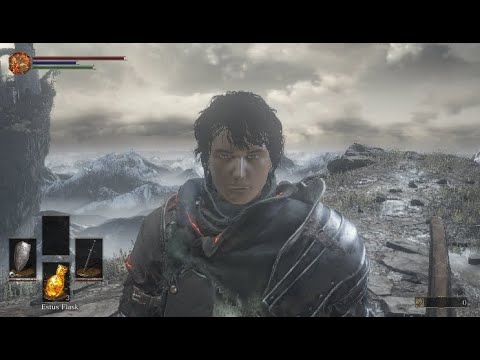
This is a short clip of my agent Sir Rollsalot the Untrained, who at this stage has trained for about 50 hours total (phase 1 and 2 combined). Currently gets about 30% win rate as of 05/06/2025 (will be updated once he gets more training time)
This project currently only runs on Windows!
-
Make sure you own a copy of Dark Souls III and that it is installed on your system.
-
Follow the SoulsGym setup instructions from their official docs: https://soulsgym.readthedocs.io/en/latest/
-
Create a virtual environment so you don’t mess up your base Python install:
(Make sure you’re using Python 3.11.2)py -3.11.2 -m venv myenv
-
Activate the environment
myenv\Scripts\activate -
Install the dependencies from the requirements file. Little Warning, since the repo currently contains multiple implementations, each folder contains its own requirements.txt (so ideally a dedicated virtual environment). This is not ideal and will be changed but as long as you see this message then it means I haven't changed it yet (but I will). The reason this is how it is is because of torch CUDA installations and also dependency conflicts for certains libraries (most of it is fixed though)
This repo contains multiple implementations:
-
DQN (Deep Q-Network):
Uses a neural network to estimate Q-values instead of a Q-table. Can generalize over high-dimensional state spaces (like what you'd get in Dark Souls). -
Double DQN:
Fixes overestimation issues in DQN by decoupling action selection and evaluation between two networks — helps stabilize learning. -
Dueling DQN:
Separates value and advantage streams to better estimate which states are valuable independently of action choice (so pretty much is my current state objectively good or not).
These implementations didn't reach great performance — but that's most likely due to insufficient training time and the high instability of RL in such a complex environment like Dark Souls III. Which is why the next implementaiton performs much better:
This repo includes a version of Double DQN using TorchRL — a PyTorch-native library for RL that provides components like:
- Environments
- Data collectors
- Replay buffers
- Loss modules
- Agents
- Collect experience by interacting with the SoulsGym environment (randomly at first to fill the rb).
- Store experiences in a replay buffer.
- Sample mini-batches and update the network.
- Periodically update the target network.
Follow the full dev process here:
📓 Project Diary (Google Doc)